EUROPE
Germany “predicts” war with Russia in 2029
Document released by the New York Times, considered a secret plan, highlights preparations for a war in Eastern Europe
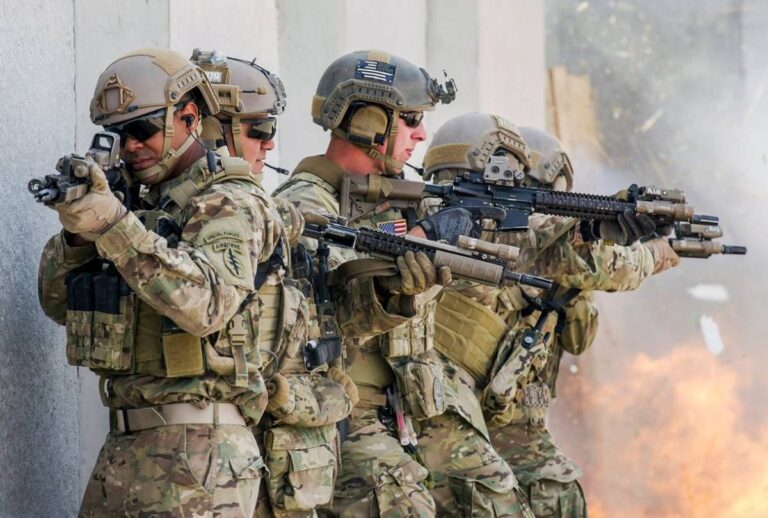
The New York Times has revealed the existence of the 1,200-page Operational Plan Germany (OPLAN DEU) produced over two and a half years by 12 senior officers of the German Army.
The drafting process took place in meetings at a military complex in the capital Berlin. The document outlines the strategic changes needed in the civilian and military spheres to prepare German society for the possibility of a war against Russia in the coming years.
OPLAN DEU is now in its second version. The first was completed by Lieutenant General André Bodemann, a veteran of the invasions of Kosovo and Afghanistan, in March 2024. Since then, the plan has been submitted to ministerial circles, government agencies and local authorities.
The Operational Plan projects the possibility of a conflict as early as 2029, as it points out that the Russians would have the capacity and willingness to attack a member of the North Atlantic Treaty Organization (NATO) in the Eastern European region. At least 800,000 NATO troops – including German and US contingents – would move through German territory. However, a series of incidents of espionage, sabotage and incursions into European airspace suggest that the attack could take place ahead of schedule. Allegations that serve to mask the fact that it is Russia that is being attacked by imperialist countries and therefore needs to defend itself.
The plan also suggests a reason to maintain the imperialist war against Russia through Ukraine by claiming that a ceasefire, such as the one being proposed by the United States this week, could also give the Russians time to improve their military capabilities.
One of the main aspects of the planning is the integration of civilian and military aspects in the preparation for aggression. The country’s infrastructure is said to be inadequate for wartime, which means that adaptations and investments in the order of 116 billion euros are needed to deal with the limited size of ports, airports, railroads and highways in relation to military equipment. The doctrinal aspect of the Plan is heir to the Cold War period (1945-1991), but with updates to the situation in society. The problems of an ageing population, the formalities of state bureaucracy and problems relating to personnel for mobilization are listed.
The German ports of the North Sea and Baltic Sea, for example, need an investment of 15 billion euros to adapt them to the war situation. This includes the sum of three billion euros for dual-use adaptations of the port docks.
The German Operational Plan also addresses how state institutions would operate in states of crisis and defense if NATO leaders were to declare an Article 5 activation scenario.
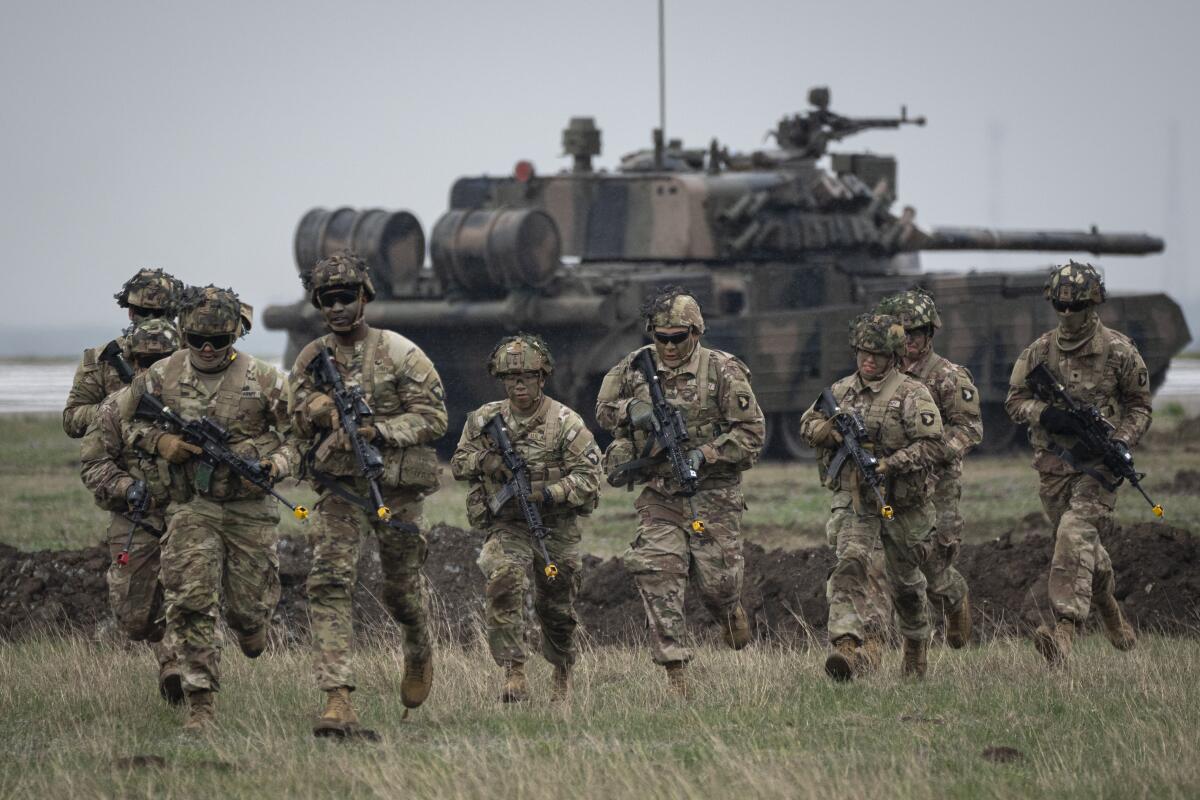
At the end of September, the “Red Storm Bravo” military exercises took place, led by the Hamburg State Military Command. These exercises included a simulation of NATO and German Army forces moving east towards Russia together.
Operational Plan Germany highlights the important role of private companies in raising the capabilities needed to sustain the war effort. The company Rheinmetall, for example, is already proficient in providing infrastructure for camps, soldiers’ quarters, toilets, showers, field kitchens and even gas stations.
Sabotage is listed as one of the biggest threats, since it is aimed at railroads and highways and would be carried out by low-level agents. The plan calls for the use of drones to protect critical infrastructure. The drone company Quantum Systems pointed out, through its spokesperson, that legislation does not allow the equipment to fly over densely populated areas and it has to be equipped with signal lights. Therefore, legislative changes are also needed in preparation for war.
Recently, the European Union proposed a “wall of drones” to protect Europe from an alleged Russian threat. The press has reported drone incidents involving Russia and Poland in recent months. The Russians have been accused of violating their neighbor’s airspace, although they have denied the accusations.
Defense Minister Boris Pistorius pointed out in an interview with the Frankfurter Allgemeine Zeitung that Russia is rapidly producing and improving its arsenal despite the war in Ukraine. Pistorius raised the possibility of a Russian attack on a NATO member sooner rather than later and the target would be an eastern country, probably referring to Poland.
The president of the German spy agency Foreign Intelligence Service, Martin Jäger, said that President Vladimir Putin is ready to test Europe’s borders and could start a confrontation at any time. The European Union, for its part, claims that Moscow could attempt an attack on any of the Baltic States.
Government statements and actions indicate a fast-paced preparation for a war against Russia. Germany will be the main front line in this conflict and has overnight become the largest army in Central Europe. The rearmament plans announced at European level involve hundreds of billions of euros.